
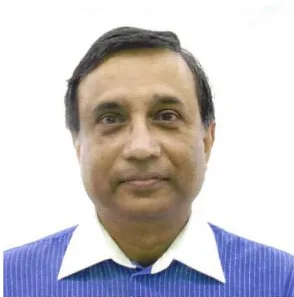
GeoField event speaker
Arif Rashid
Division Chief - Design, Monitoring, Evaluation, and Applied Learning Division, Bureau for Humanitarian Assistance
USAID
Arif Rashid leads the Design, Monitoring, Evaluation, and Applied Learning (DMEAL) Division in the Bureau for Humanitarian Assistance (BHA). The division is responsible for ensuring high-quality programming, and innovation through strategic planning and activity design, consistent and effective performance monitoring; comprehensive, appropriate, and rigorous evaluation, and purposeful learning across the full spectrum of BHA responses and programming. Arif joined USAID in 2013 and led the Monitoring and Evaluation Team in the legacy Office of Food for Peace (L-FFP) before assuming his current acting role in BHA. He led the improvement in the rigor of monitoring and evaluation of humanitarian assistance and resilience programs, including developing the M&E capacity of L-FFP and partner staff. Arif conceptualized the Refine-and-Implement and played an instrumental role in developing the model - a post-award co-creation model adopted by OAA as the best practice in USAID. He co-led the development of the sustainability approach to enable communities to maintain outcomes beyond the life of BHA programs - a process that focuses on empowering local communities and service providers to sustain the services and input delivery beyond the life of a program. He provided leadership in developing a collaborative approach to process evaluations used in several countries. Arif received his post-graduation degree from the University of Arizona. He has nearly 30 years of experience in emergency response and international development work, focusing on assessments, analysis, project design, monitoring, evaluation, and management. Before joining USAID, he worked for a global food security and nutrition project designed to increase the capacity of food security implementing agencies, networking, and knowledge management; a private contractor providing technical assistance to UN agencies and NGOs, and NGOs managing multi-sectoral food security projects.